Cultural Bites · № 02 · 6 min read
On why the most interesting people always seem to be holding a cup
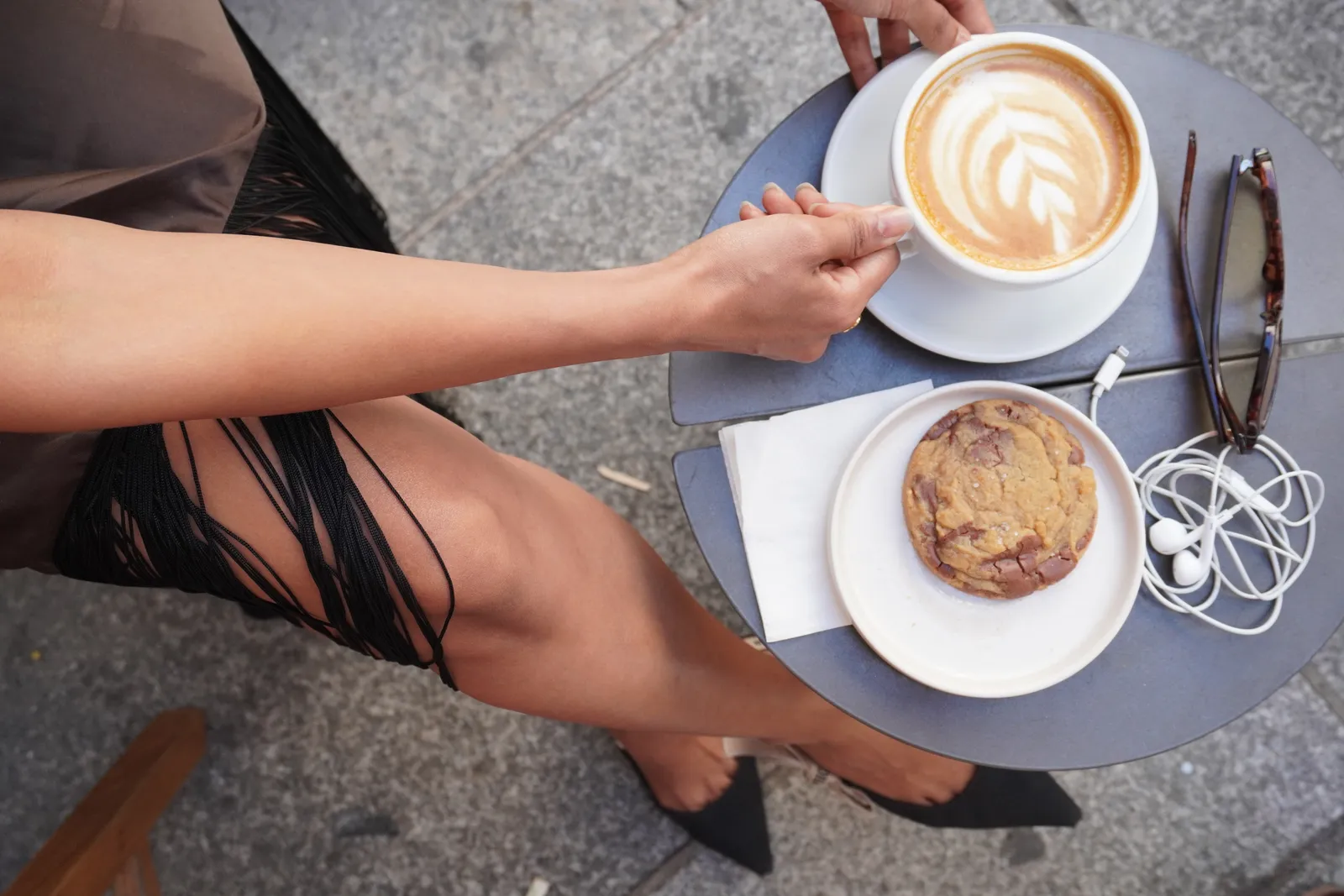
The coffee shop has always been the room where things begin. Before the gallery, before the runway, before the studio, there was the table in the corner, the espresso going cold, and an idea that had not yet found its form.
This is not a coincidence. Coffee and creativity have shared an address for centuries: from the Viennese coffeehouses where Freud and Klimt argued philosophy to the Parisian cafés where Picasso sketched on napkins and Sartre wrote entire novels in the noise of a busy morning. The coffee shop is not just a place where creative people happen to go. It is, in some essential way, a condition of the creative life.
The runway and the roast
Fashion has always understood this. The relationship between coffee culture and the fashion world is not merely aesthetic. It is structural. Both industries are built on the same foundations: the obsessive attention to detail, the belief that how something is presented is inseparable from what it is, the cultivation of an atmosphere that makes people feel something before they understand why.
Walk into any concept store in Paris, Milan, or Tokyo that carries serious fashion and you will almost certainly find a serious coffee bar. This is not an accident of commercial real estate. It is a shared philosophy: that the experience of beauty is physical, sensory, and cumulative. The coffee is not secondary to the coat. They are both part of the same conversation about how we want to move through the world.
Both coffee and fashion are built on the same foundation: the belief that how something is presented is inseparable from what it is.
The café as canvas
The coffee shop is also one of the last genuinely democratic cultural spaces. A gallery requires a certain confidence to enter. A theatre requires a ticket. But a café is always open, always available, never asks you to justify your presence. You can sit for an hour with a single espresso and no one will question what you are doing there.
This is why artists have always used them. Not because the coffee is better than in a studio, but because the café provides something a studio cannot: the world moving past you while you are still, the low hum of human activity that turns out to be exactly the right background noise for thinking. The impressionists painted light. The existentialists wrote about being. The best of contemporary fashion is photographed in cafés precisely because the setting communicates: this is where real life happens.
Interior design as a statement of values
The coffee shops we visit are, without exception, also design stories. The founder who chose stainless steel for the ceiling because it reminded her of ice. The founder who lined her walls with white like a blank page. The founder who brought her grandparents' cups from their hotel and placed them on the counter every morning. These are not decorating decisions. They are editorial ones.
The coffee shop interior is the founder's first piece of communication with the world. Every chair, every surface, every object says: this is what I believe. This is what I find beautiful. This is what I want you to feel. In this way, the coffee shop is closer to a fashion collection or an art installation than it is to a restaurant. It is a curated world, assembled with intention, offered to whoever is willing to slow down long enough to receive it.
The culture behind the cup
What connects coffee, fashion, art, and culture is not the objects themselves but the quality of attention they ask of us. All four require the same thing: the willingness to be present, to notice, to let something affect you. The person who has developed a taste for a well-made espresso has developed the same muscle that the person who stands in front of a painting for longer than thirty seconds uses. It is the muscle of paying attention.
This is what The Original Coffee Club is built on. Not the idea that coffee is elevated or exclusive, but the idea that what happens around a cup of coffee, when you pay close enough attention, is as rich and layered and surprising as anything you will find in a gallery, on a runway, or in the pages of the most carefully edited magazine. The most interesting people have always been holding a cup. We are simply starting to write about why.
More reading
- 01Why Coffee is a Love LanguageOn the quiet ways we use a cup to say the things we do not say out loud
- 03Coffee as a Morning RitualOn what the first cup of the day actually does, and why it matters more than caffeine
- 04The Barista as ArtistOn the skill, the theatre, and the deeply misunderstood profession behind every great espresso