Cultural Bites · № 04 · 6 min read
On the skill, the theatre, and the deeply misunderstood profession behind every great espresso
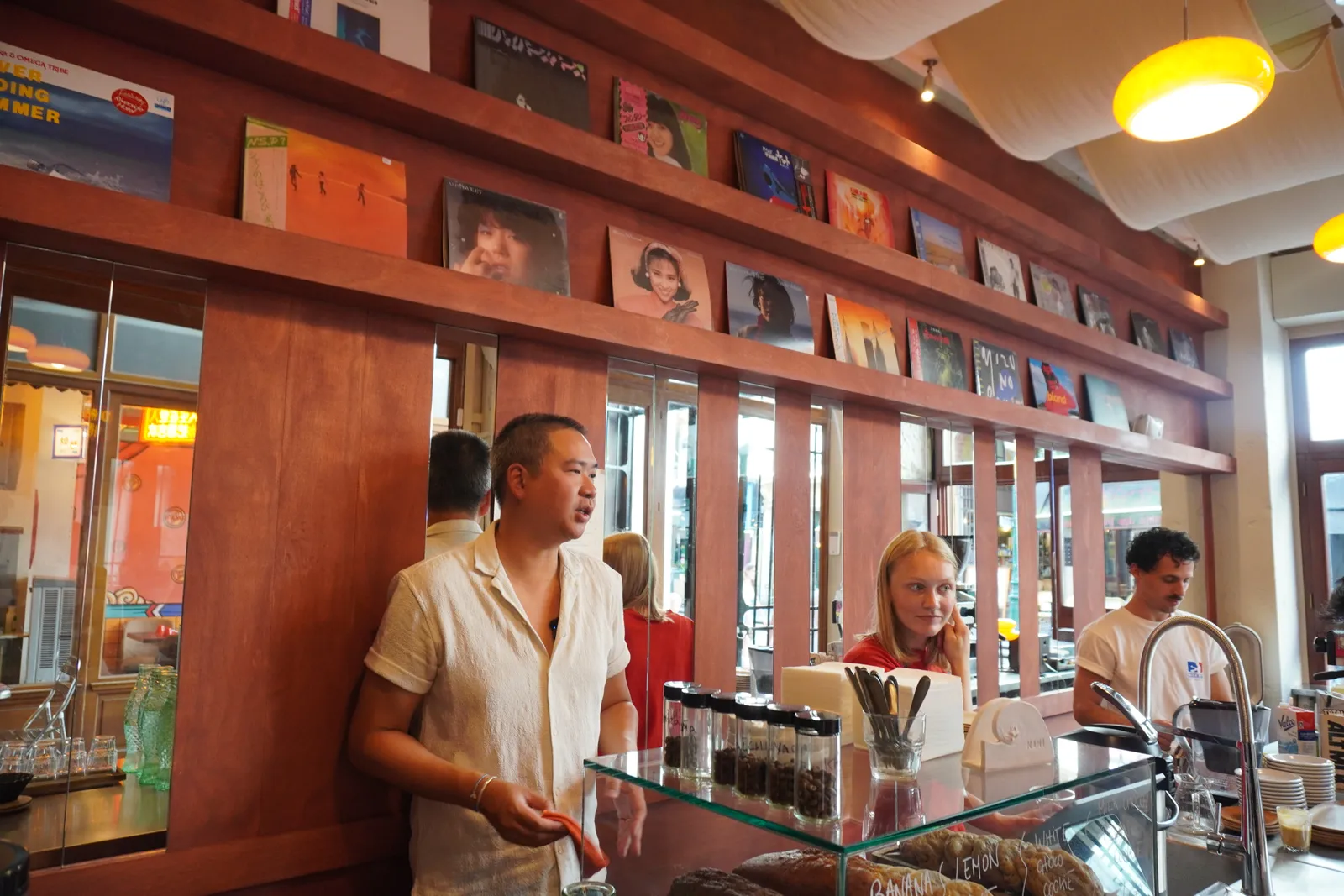
We have a habit of overlooking the people who make things with their hands. The barista stands at the counter for eight hours, makes five hundred cups, speaks to two hundred people, and goes largely unnoticed. This is a mistake.
There is a version of barista culture that the world has accepted: the tattooed artisan, the third-wave café, the Instagram latte art. This version is not wrong, but it is partial. It focuses on the aesthetic and misses the intellectual, the physical, and the deeply human dimensions of a craft that is, when practised at its best, something genuinely extraordinary.
The knowledge required
To make a genuinely good espresso requires an understanding that spans chemistry, agriculture, engineering, and sensory science. The barista must know that coffee is a fruit, and that its flavour is determined by the variety of plant, the altitude and soil where it was grown, the method of processing after picking, the roast profile applied to the bean, and the extraction variables applied at the machine (water temperature, pressure, grind size, dose, yield, and time), all of which interact with each other in ways that change with humidity, with the age of the roast, with the hardness of the water.
A barista who has mastered this is not a coffee-maker. They are a translator: someone who takes a raw material with a specific origin, a specific history, a specific set of flavour compounds, and makes decisions at the machine that either reveal or obscure what the farmer grew and the roaster unlocked. The espresso that lands in your cup is the end of a very long chain of decisions. The barista is the last link. That position carries real responsibility.
A barista who has mastered their craft is not a coffee-maker. They are a translator: someone who reveals the story inside the bean.
The physical discipline
There is also a bodily intelligence to great barista work that is easy to underestimate. The tamp (the compression of ground coffee into the portafilter before extraction) requires a consistent pressure of around fifteen kilograms, applied evenly, repeated hundreds of times a day, for years. The milk steaming: a question of temperature, texture, and timing executed simultaneously while monitoring the extraction and acknowledging the next customer. The latte art: a physical skill that takes months to acquire and requires, every time, a precise combination of jug angle, pour speed, and wrist movement.
Professional baristas train like athletes. They cup (taste and evaluate) dozens of coffees daily to calibrate their palate. They pull test shots to dial in each new bag of beans. They adjust the grinder by fractions of a step. They track extraction yields with refractometers. This is not intuition. It is rigour, practised until it becomes fluent.
The human element
But perhaps the most underappreciated skill of a great barista is the one that has nothing to do with coffee: the ability to read a room, to understand what a person needs in the moment they walk through the door, and to give it to them.
The barista is often the first person someone speaks to in the morning. On some days, the only person. The quality of that interaction (whether the customer is seen, acknowledged, remembered, made to feel welcome) shapes the rest of their morning in ways that the coffee alone cannot. The best baristas understand this. They are not simply making a product. They are managing the atmosphere of a space, the emotional register of a room, the tone of fifty small interactions every hour.
This is why we always spend time with the people behind the counter. Not just the founders. The baristas. Because the founder imagines the space. The barista is the space. Every day, through the accumulated weight of five hundred cups and two hundred conversations, they make it real.
The misunderstanding
The word barista comes from the Italian word for bartender, bar person. It carries, in Italian, a dignity that is not always present in the English translation. In Italy, the barista behind a great espresso bar has often worked the same counter for twenty or thirty years. They are known by name. Their presence is part of the neighbourhood fabric. Their retirement is mourned.
We would do well to borrow some of that respect. The barista who makes your coffee every morning, who remembers how you take it, who knows what a difficult day looks like on your face, who makes a cup that is genuinely worth drinking, is practising a craft that rewards years of study, physical discipline, and emotional intelligence. They are, in the truest sense of the word, an artist. They just work with an espresso machine instead of a canvas. And their work disappears the moment it is finished, which makes it, if anything, more remarkable.
More reading
- 01Why Coffee is a Love LanguageOn the quiet ways we use a cup to say the things we do not say out loud
- 02The Intersection of Coffee, Fashion, Art, and CultureOn why the most interesting people always seem to be holding a cup
- 03Coffee as a Morning RitualOn what the first cup of the day actually does, and why it matters more than caffeine